In-Depth Analysis of the Precious Metals Market in August 2026: Investment Opportunities Amidst Geopolitical Risks and Macroeconomic Games
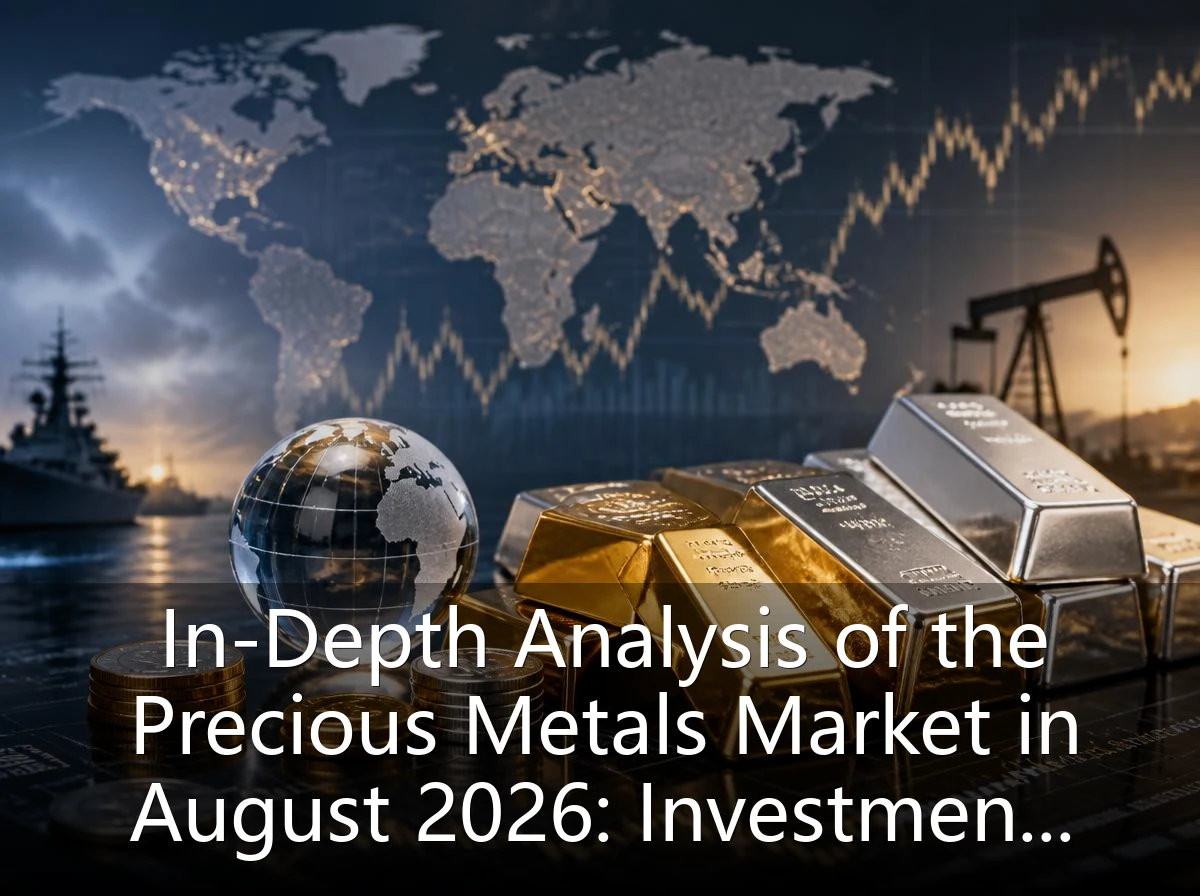
In the uncertain market environment of August 2026, the precious metals market has once again become a focal point for global investors. Gold prices have broken through the $2,600 mark, and silver prices have also reached recent highs, which is not just a simple price fluctuation but a profound reflection of changes in the global economic landscape. This article will delve into the current dynamics of the precious metals market, explore key factors affecting gold and silver prices, and provide professional market analysis and investment advice for investors.
I. Current Market Overview: Gold and Silver Hit New Highs Together
According to the latest market data, as of August 14, 2026, international gold prices have stabilized above the $2,600/ounce mark, a historic breakthrough. Meanwhile, silver prices have also broken through $46/ounce, reaching a five-year high. This dual-record situation reflects market concerns about future economic prospects and strong demand for safe-haven assets.
In the Thai market, due to fluctuations in the Thai baht exchange rate, domestic gold prices have performed more strongly. The price of Thai gold jewelry has broken through 1,800 baht per gram, reaching the highest level in recent years. This difference between the international and domestic markets mainly stems from the impact of the baht's depreciation and the enthusiastic pursuit of gold by local Thai investors.
II. Key Factors Affecting Precious Metals Prices
1. Geopolitical Risks: Gold's Traditional Safe-Haven Function
The escalation of geopolitical tensions in the Middle East is one of the main factors driving gold prices higher. As regional conflicts intensify, global investors are turning to gold as a traditional safe-haven asset. The latest report from the World Gold Council shows that the geopolitical uncertainty index has a strong positive correlation with gold prices, a relationship that is particularly evident in the current market environment.
Analysts point out that the impact of geopolitical risks on gold prices is not limited to short-term fluctuations but may also change the long-term investment landscape. Many institutional investors and high-net-worth individuals are re-evaluating their asset allocations, increasing the proportion of gold in their portfolios, a trend that may continue to drive gold demand.
2. Macroeconomic Factors: The Game Between Inflation and Interest Rates
Macroeconomic data also has a significant impact on the precious metals market. The weaker-than-expected U.S. non-farm payrolls data in July exacerbated market concerns about a recession, directly pushing gold prices higher. At the same time, the monetary policy direction of the Federal Reserve has become a focal point of market attention.
Currently, the market expects the Federal Reserve to cut interest rates earlier than anticipated, which keeps real interest rates at a low level, thereby reducing the opportunity cost of holding gold. This macroeconomic environment provides strong support for gold prices. Meanwhile, silver's role as an industrial metal is also becoming apparent, with the growth in industrial demand driven by AI technology providing additional support for silver prices.
3. Central Bank Gold Purchases and ETF Flows: Structural Changes in the Market
Global central bank gold purchases are another important driving factor in the current market. According to data from the World Gold Council, global central bank gold purchases in the first half of 2026 reached a historic high, with Asian central banks becoming the main force in gold buying. This strong demand from official sectors provides solid fundamental support for the gold market.
At the same time, the capital flows of gold ETFs are also worth noting. Recently, gold ETFs have seen net inflows for multiple consecutive weeks, indicating the long-term confidence of institutional investors in gold. This structural change in the market may mean that the gold market is undergoing an important transition period.
III. Technical Analysis: Trends and Opportunities
1. Technical Analysis of Gold Trends
From a technical perspective, gold prices have broken through long-term resistance levels and gained strong support near the $2,600 mark. Technical indicators show that gold's momentum indicators are in the overbought zone, but this does not mean a significant pullback is imminent. Instead, strong buying pressure may push gold prices even higher.
In terms of moving averages, gold prices have stabilized above all major moving averages, showing a clear bullish arrangement. This technical pattern indicates that the long-term trend of the gold market remains strong. However, investors should also pay attention to possible technical adjustments in the short term.
2. Technical Analysis of Silver Trends
Silver's technical trend is also noteworthy. Silver prices have broken through the key resistance level of $45/ounce and are moving towards the target of $50/ounce. Technical analysts point out that silver's trend is relatively stronger than gold's, mainly due to the support of its industrial properties.
From the perspective of the gold-silver ratio, the current ratio has contracted to around 72, indicating that silver is performing relatively stronger than gold. This phenomenon usually means that silver may enter a super catch-up cycle, providing good opportunities for investors.
IV. Thai Market Characteristics: Exchange Rates and Local Demand
In the Thai market, precious metal prices are significantly affected by the Thai baht exchange rate. Recently, the baht has depreciated against the U.S. dollar, causing gold prices denominated in baht to rise more than in the international market. For Thai investors, this means the cost of buying gold has increased, but it may also bring higher profit potential.
Local demand for gold in the Thai market remains strong. Traditionally, Thais have the habit of storing gold, a cultural factor that is more prominent in the current uncertain market environment. At the same time, the Thai government's regulatory policies on the gold market also affect local price trends.
V. Investment Strategy Recommendations
1. Long-Term Investors: Allocating Gold as a Hedging Tool
For long-term investors, now is a good time to allocate gold. As a traditional safe-haven asset, gold demonstrates its value when market uncertainty increases. It is recommended that investors include gold in their portfolios as a tool to hedge risks of other assets.
In terms of allocation, experts recommend that gold account for 5-10% of the investment portfolio. This allocation not only reduces overall risk but also provides stable returns during market volatility.
2. Short-Term Traders: Seizing Volatility Opportunities
For short-term traders, the current market volatility provides good trading opportunities. The price fluctuations of gold and silver are relatively large, which provides ample space for technical analysis. It is recommended that traders closely monitor key resistance and support levels and formulate clear entry and exit strategies.
At the same time, market risk management should be noted. Due to the high volatility of the precious metals market, it is recommended that traders set stop-loss orders to control the risk of individual trades. Do not over-leverage to avoid significant losses when the market reverses.
3. Thai Investors: Paying Attention to Exchange Rate Risks
For Thai investors, it is necessary to pay special attention to the risks of the Thai baht exchange rate. Fluctuations in the baht will directly affect the actual returns of gold investments. Investors can consider using tools such as forward foreign exchange contracts to hedge exchange rate risks.
At the same time, gold ETFs and gold futures in the Thai local market are also good investment choices. These financial products provide more convenient investment channels and can avoid the hassle of storing physical gold.
VI. Future Outlook: A New Landscape for the Precious Metals Market
Looking ahead, the precious metals market may enter a new stage of development. On one hand, geopolitical risks and macroeconomic uncertainty may continue to drive gold demand; on the other hand, silver's industrial demand may grow with technological development, changing the landscape of the gold and silver market.
From a long-term perspective, the precious metals market may show the following trends:
- Gold prices may continue to rise, breaking through the $2,700 or even $3,000 mark
- Silver prices may enter a super catch-up cycle, and the gold-silver ratio may further contract
- Central bank gold purchases may become a market norm, changing the supply and demand structure of the gold market
- ETF capital flows may continue to strengthen, improving market liquidity
- The Thai market may become an important support point for Asian gold demand
In general, the precious metals market in August 2026 is full of opportunities and challenges. Investors need to maintain a cautious and optimistic attitude, closely monitor market dynamics, and formulate appropriate investment strategies based on their own situations. Whether it is long-term allocation or short-term trading, the precious metals market offers abundant opportunities, but also comes with corresponding risks. Only by fully understanding the market can one succeed in this ever-changing market.

ข้อควรระวังด้านลิขสิทธิ์: บทความนี้เป็นข้อมูลต้นฉบับของ ThaiDivi กรุณาติดต่อเราสำหรับการขออนุญาตเผยแพร่ซ้ำ