Market Overview: Adjustment and Opportunities After Precious Metals Reach New Highs
As we enter September 2026, the global precious metals market, after several months of strong performance, has entered a critical adjustment phase. After breaking historical highs in August, gold prices are currently fluctuating around the $2,600 mark, while silver, supported by AI industrial demand, is showing relative strength with prices stabilizing above $45. In Thailand's domestic market, the continuous fluctuations in the Baht exchange rate have added uncertainty to local precious metal prices while creating unique arbitrage opportunities for investors.
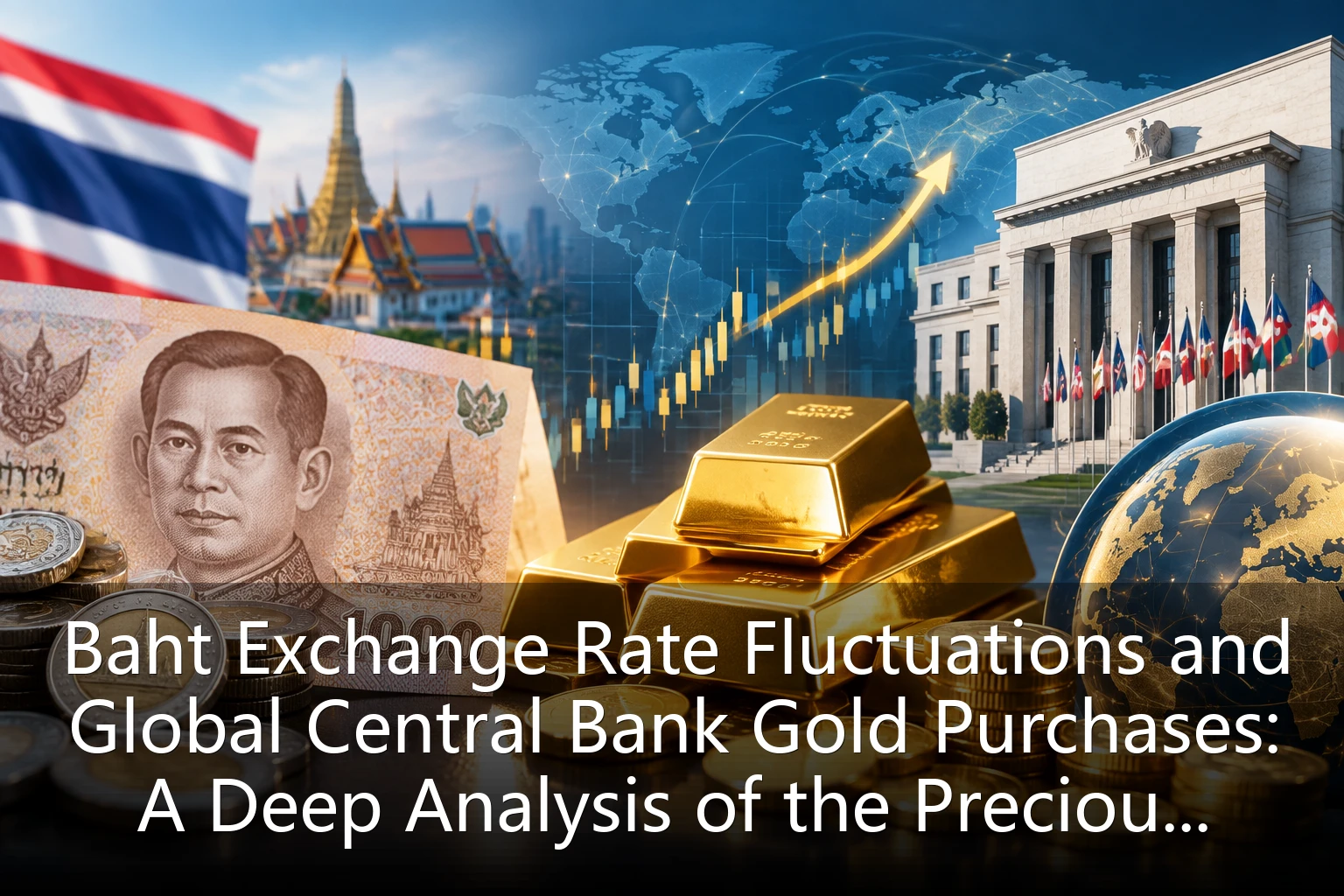
Dual Driving Factors: Baht Exchange Rate and Global Central Bank Gold Purchases
Impact of Baht Exchange Rate Fluctuations
Recently, the Baht has continued to weaken against the US dollar, reaching a one-year low. This trend has directly affected domestic precious metal prices in Thailand, particularly gold jewelry prices. The depreciation of the Baht has made dollar-denominated precious metals more expensive in the Thai market, which has not only stimulated local investors' gold purchasing demand but also pushed up gold jewelry prices. According to market data, domestic gold jewelry prices in Thailand have reached over 2,200 Baht per tael, an increase of approximately 15% compared to the same period last year.
The impact of Baht depreciation on the precious metals market is twofold: on one hand, rising import costs for gold have pushed up local prices; on the other hand, Thai gold miners have gained enhanced export competitiveness, which could lead to increased domestic supply. Additionally, the Bank of Thailand's intervention in the precious metals market will be a key point to watch, as the central bank may use market operations to stabilize the exchange rate, indirectly affecting precious metal prices.
Global Central Bank Gold Purchase Boom Continues
Meanwhile, the global central bank gold purchase boom continues. The latest report from the World Gold Council shows that global central banks purchased a record 800 tons of gold in the first half of 2026, with Asian central banks leading the charge. Central banks in Asian countries such as China, India, and Thailand are actively increasing their gold reserves to diversify foreign exchange reserves and reduce dependence on the dollar.
The central banks' gold purchases have had a dual impact on the market: on one hand, they have directly increased market demand, supporting gold prices; on the other hand, central banks' gold purchase decisions reflect expectations about global economic prospects, which will affect investor sentiment and decisions. Notably, some central banks are beginning to position gold as a reserve asset alongside other digital assets, which could reshape the supply and demand dynamics of the precious metals market in the future.
Silver Market: AI Industrial Demand and Technological Breakthroughs
Among the precious metals family, silver has performed exceptionally well recently, with prices breaking through the $45 mark for the first time, reaching a recent high. This trend is mainly driven by two factors: the surge in AI industrial demand and supply-side tightening.
AI Industrial Demand Drives Silver Prices
With the rapid development of artificial intelligence technology, demand for high-efficiency heat dissipation materials has surged. With its excellent thermal conductivity, silver has become the material of choice for heat dissipation systems in AI chips and high-performance computing equipment. According to industry analysts, AI industrial demand for silver is expected to increase by approximately 30% by 2027, which will further exacerbate the supply-demand gap in the silver market.
In addition to the AI sector, silver's applications in solar panels, electric vehicle batteries, and other new energy technologies continue to expand. The growth of these industrial demands provides strong fundamental support for silver prices, causing it to show a unique trend different from gold in the precious metals market.
Silver Supply Tension Continues
From the supply side, global silver mine production has shown a downward trend in recent years. Major silver-producing countries such as Mexico, Peru, and Bolivia face multiple challenges including declining ore grades and rising production costs. At the same time, increasingly strict environmental regulations have restricted the development of new mines, leading to slow growth in silver supply.
ETF funds continue to flow into the silver market, further exacerbating market tensions. Data shows that global silver ETFs had a net inflow of a record 1,200 tons in the first half of 2026, reflecting investors' optimistic expectations for silver's future prospects.
Technical Analysis: Interpreting Precious Market Trends
From a technical perspective, the gold market is currently in a critical consolidation phase. Prices are encountering resistance around $2,600 while finding support at $2,500. Technical indicators show that the gold Relative Strength Index (RSI) is in a neutral range, indicating that market forces are relatively balanced. In the short term, gold prices may fluctuate between $2,550 and $2,650, waiting for new catalysts.
The silver market, on the other hand, shows stronger technical momentum. Prices have successfully broken through the $45关口, showing upward momentum on the technical charts. The MACD indicator shows bullish signals, while the moving average system is in a bullish arrangement, suggesting that the silver market may enter a new upward cycle. The key support level is at $42, and if this level can be effectively held, silver prices could further rise to the $48-50 range.
Investment Strategies: Seizing Current Market Opportunities
Gold Investment Recommendations
For gold investors, the current market environment offers various allocation strategies. First, it is recommended to adopt a position-building approach, gradually increasing positions during price corrections to avoid investing too much capital at once. Second, consider gold ETFs as core allocations while retaining some funds for physical gold purchases to achieve a balance between liquidity and security.
In terms of specific operations, in the short term, focus on the support level around $2,500. If prices find support and rebound at this level, positions can be appropriately increased; if this level is broken, it may be necessary to wait for market trends to become clearer. In the long term, against the backdrop of increasing global economic uncertainty, gold's value as a hedge asset remains prominent.
Silver Investment Strategy
The strong performance of the silver market provides unique opportunities for investors. Since silver has both commodity and financial properties, investors can consider various allocation methods. For investors with higher risk tolerance, consider investing through silver futures or leveraged ETFs to capitalize on price volatility opportunities; for conservative investors, silver ETFs or physical silver can be chosen as part of asset allocation.
It is particularly worth noting that silver's industrial demand makes its price volatility higher than gold's, which means investing in silver may bring higher returns but also comes with higher risks. Investors should reasonably allocate the proportion of silver assets based on their own risk preferences and investment objectives.
Unique Opportunities in the Thai Market
For local Thai investors, fluctuations in the Baht exchange rate have created unique investment opportunities. On one hand, take advantage of Baht depreciation to appropriately increase gold asset allocation to hedge exchange rate risks; on the other hand, pay attention to the performance of local Thai gold mining stocks, as these companies may benefit from rising domestic gold prices and export advantages brought by Baht depreciation.
In addition, Thailand's gold jewelry market is also worth watching. Rising jewelry prices may drive profit growth for related companies, but investors need to pay attention to changes in the price difference between jewelry and gold bars, as well as the impact of changes in consumer demand.
Future Outlook: Precious Metals Market Trend Analysis
Looking ahead to the coming months, the precious metals market will continue to be affected by multiple factors. From a macroeconomic perspective, the monetary policy direction of major global economies will be crucial. If the Federal Reserve begins to cut interest rates, it may push precious metal prices higher; conversely, if a tight monetary policy is maintained, it may put pressure on prices.
In terms of geopolitical risks, the continued tension in the Middle East and the continuation of the Ukraine issue could stimulate safe-haven demand, pushing gold prices higher. At the same time, the arrival of a global election year and increased political uncertainty may also provide support for the precious metals market.
From the supply side, challenges facing precious metal mines may continue, with delays in new mine development and declining production from existing mines supporting precious metal prices in the long term. Especially in the silver market, the expanding supply-demand gap may lead to stronger price performance than gold.
For the Thai market, the trend of the Baht exchange rate will continue to affect domestic precious metal prices. Investors need to closely follow the monetary policy direction and exchange rate management strategies of the Bank of Thailand, as these factors will determine the future direction of Thailand's precious metals market.
Conclusion: Rational Allocation, Seizing Opportunities
Overall, the precious metals market in September 2026 is at a critical period with multiple factors intertwined. Baht exchange rate fluctuations and global central bank gold purchases form dual drivers, while AI industrial demand has injected new vitality into the silver market. Investors should rationally allocate precious metal assets based on their own risk preferences and investment objectives, while closely monitoring market dynamics and adjusting investment strategies in a timely manner.
In the current complex market environment, precious metals, as traditional safe-haven assets and value storage tools, still have prominent allocation value. Whether long-term investors or short-term traders, they should fully understand the characteristics and risks of the precious metals market and make investment decisions that suit their own situation. As the market shows, the volatility of the precious metals market brings both risks and abundant opportunities, and the key lies in how to grasp and respond to them.

ข้อควรระวังด้านลิขสิทธิ์: บทความนี้เป็นข้อมูลต้นฉบับของ ThaiDivi กรุณาติดต่อเราสำหรับการขออนุญาตเผยแพร่ซ้ำ