


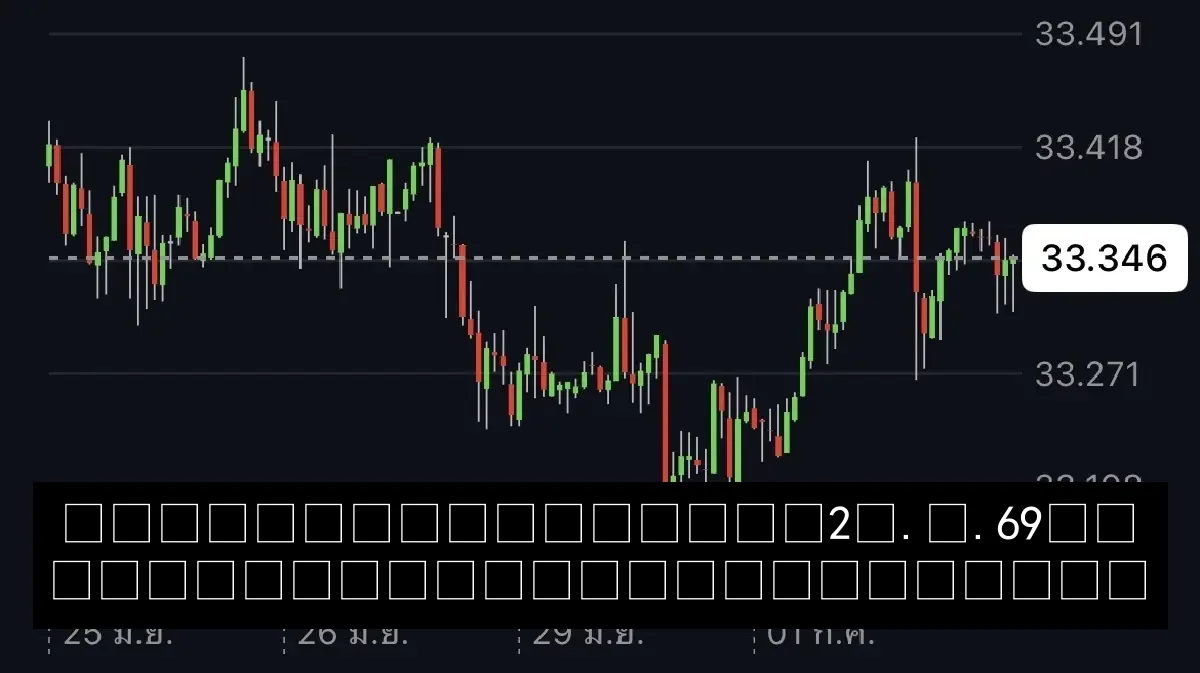
Baht weakens today, 2/7/2026, as the dollar gets Fed support
Overall FX market view
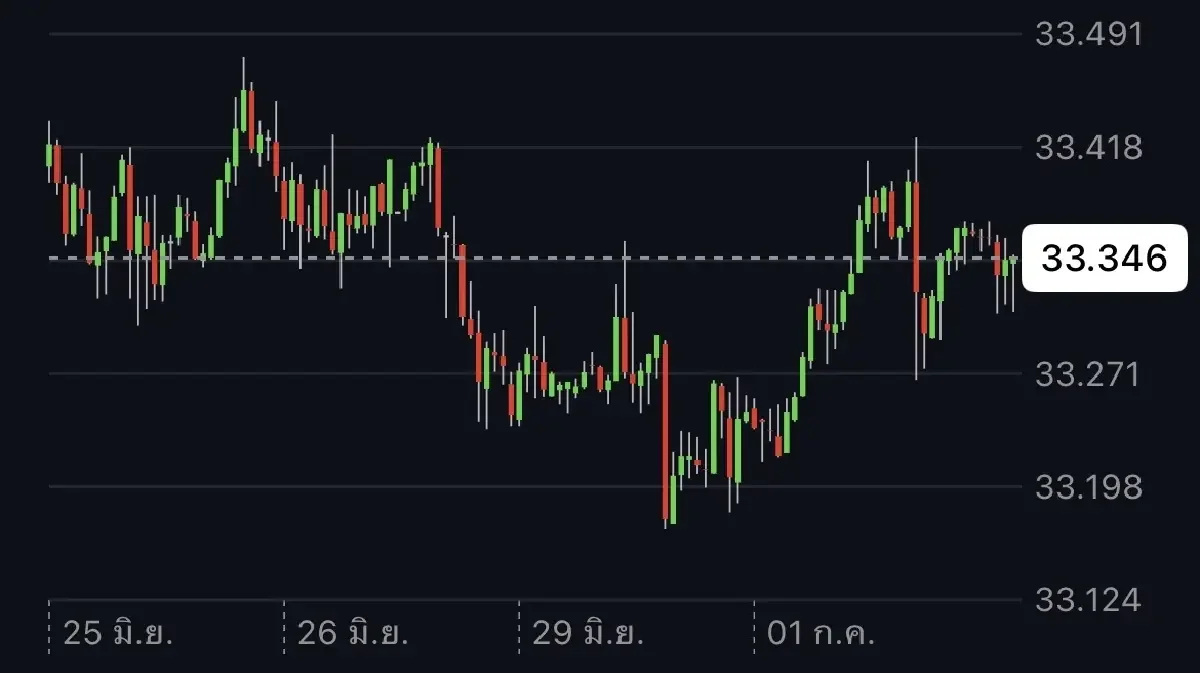
The baht opened today, 2/7/2026, at 33.33 baht per US dollar and was described as "weaker," slightly firmer than the previous close. It still trades softer as the dollar strengthens, and Krungthai Bank estimates today's baht range at 33.15-33.55 per US dollar.
Key points
- The baht opened at 33.33 per US dollar, slightly firmer, but overall still tends to weaken as the dollar strengthens.
- The dollar is supported by market expectations that the Fed may raise rates.
- Short-term volatility factors include waiting for U.S. labor data and selling pressure in AI/semiconductor stocks.
Why it moved: the dollar, the Fed and U.S. economic data
Krungthai Bank Global Markets strategist for currencies and capital markets Poon Panichpibul said the baht opened this morning at 33.33 per US dollar, slightly firmer than the previous close of 33.38 baht. The estimated range for today is 33.15-33.55 baht per US dollar.
Since last night, the baht has traded in a downward range (33.26-33.43 baht per US dollar). It weakened at one point because the dollar strengthened after the market raised expectations for a Fed rate hike. The market reacted to a better-than-expected Challenger layoff survey report and adjusted positions before Fed Chair Kevin Warsh's remarks at the ECB's Sintra symposium. The baht then recovered.
Fed Chair Kevin Warsh said U.S. inflation risks have been gradually easing, so the market cut expectations for Fed rate hikes this year, from about a 56% chance of two hikes to about 33%. The dollar and the U.S. 10-year Treasury yield came under pressure, while gold (XAUUSD) was supported.
However, gains in the baht and gold were limited because the dollar still had market support: some traders raised the probability of two hikes this year to 43%, ahead of Thursday's U.S. nonfarm payroll report. At the same time, selling pressure in AI/semiconductor tech stocks supported the dollar and weighed on gold.
Baht outlook: two-way risk and trading range
Krungthai Bank maintains its view that the baht faces two-way risk in the near term, depending on developments in the Middle East, until the U.S. and Iran formally sign a peace agreement and reopen the Strait of Hormuz. Market participants should use diversified hedging strategies, especially options strategies, to strengthen FX risk management under high uncertainty.
Intraday, selling pressure in U.S. and European AI/semiconductor stocks may continue into Asia, pressuring Asian currencies. The baht needs to watch the extent of foreign net selling of Thai stocks, especially AI/semiconductor names.
If AI/semiconductor selling pressure continues, it could further weigh on the baht through lower gold prices caused by position reductions and liquidity needs. Still, baht weakness may be limited because the market may wait for U.S. labor data before adjusting positions clearly.
Krungthai Bank sees the baht testing resistance at 33.50 per US dollar, and if gold prices fall sharply, it could break above that range again, with the next resistance at 33.75 baht.
If risk-off sentiment becomes severe, watch for yen position adjustments or short-yen carry trade unwinding, as short yen positions are high and near 2024 levels. Risk-off sentiment could cause a sharp yen rally and temporarily ease baht depreciation. For the yen and the baht to keep strengthening, expectations for a Fed hike would need a major shift, from firm belief in hikes to rate holds or even cuts.
Krungthai Bank stresses that volatility needs attention around the U.S. labor data release, roughly 19:30 Thailand time.
The overall view remains unchanged: the baht faces depreciation pressure as the dollar strengthens, until the market lowers expectations for Fed rate hikes, which may require key economic data, especially inflation. If tensions in the Middle East rise and energy prices increase, the chance of a Fed hike could rise, leading to continued baht weakness.
Krungthai Bank has not changed its baht outlook, believing the baht will remain in a depreciation trend or at least move sideways until the weekly chart clearly breaks below the 32.50 baht per US dollar support zone.
Global investment outlook: stocks, AI/semiconductor trends, Treasury yields and gold
U.S. stocks were supported by Meta's +8.8% gain, driven by its cloud business expanding AI services, and by Fed Chair Warsh's remarks, but AI/semiconductor stocks came under pressure again (Micron -10.6%), dragging the S&P 500 down 0.22% and the Nasdaq down 0.66%.
Europe's STOXX 600 reversed to a 0.38% loss, weighed down by AI/semiconductor names such as ASML (-4.6%) as the market worried about earnings and stretched valuations. Lower energy prices also hit energy stocks such as BP (-2.4%). European equities were supported by eurozone CPI coming in below expectations and by dovish comments from ECB and Bank of England officials at the Sintra symposium.
The U.S. 10-year Treasury yield moved in a range of 4.45%-4.50% and later traded near 4.48%, showing yields still face two-way risk depending on Middle East developments and U.S. economic data.
In FX, the dollar was range-bound, supported by selling pressure in AI/semiconductor stocks and a weaker yen. The DXY dollar index hovered around 101.4, in a 101.2-101.6 range.
As for gold, even though the dollar and Treasury yields softened as Fed rate-hike expectations eased, selling pressure in AI/semiconductor stocks still weighed on gold, which traded in a range near USD 4,050 per ounce.
Focus in the next 24 hours
The focus is on U.S. labor market data: nonfarm payrolls, unemployment rate, average hourly earnings, and durable goods orders, all of which may affect the Fed's rate outlook. The market is also watching comments from ECB and Bank of England officials to assess policy direction.
In addition, investors are watching Middle East developments and the direction of tech stocks, especially AI/semiconductor names, as they may trigger market volatility.

ข้อควรระวังด้านลิขสิทธิ์: บทความนี้เป็นข้อมูลต้นฉบับของ ThaiDivi กรุณาติดต่อเราสำหรับการขออนุญาตเผยแพร่ซ้ำ




