Platinum Market Sees New Turning Point: Investment Prospects Analysis Driven by Dual Forces of Hydrogen Energy Revolution and Supply Contraction
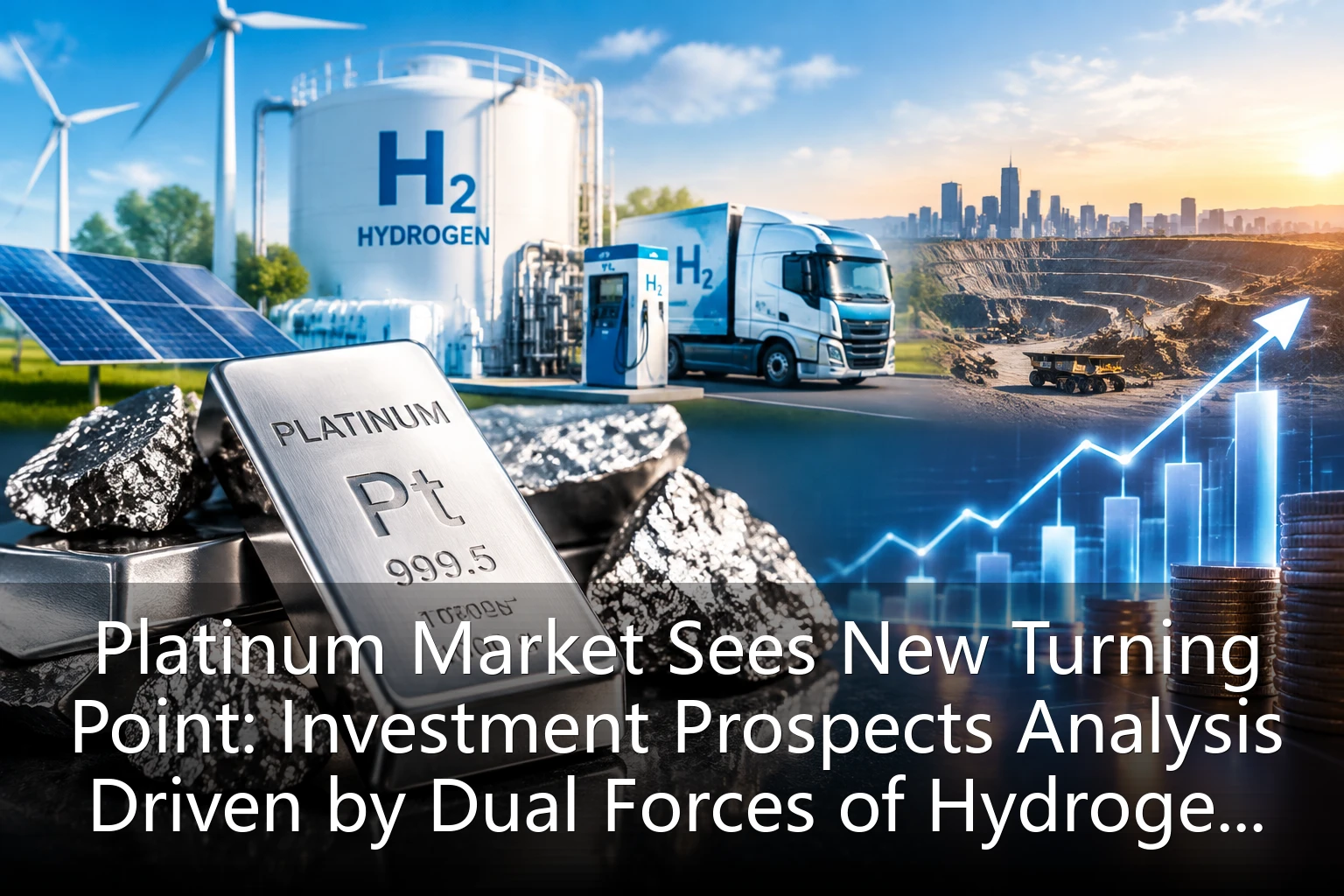
\nIn September 2026, the global platinum market reached a historic turning point, with prices breaking through the $1,200 per ounce mark, reaching a five-year high. This important milestone marks the revaluation of platinum's dual value as both a key industrial metal and an investment asset. Driven by the hydrogen energy revolution, the demand for platinum in fuel cell catalysis has surged, while at the same time, supply contraction caused by reduced production capacity in South African mines and geopolitical factors in Russia has jointly formed the dual driving foundation of the platinum market. This article will deeply analyze the dynamic changes in the current platinum market, explore the transformation of its supply and demand structure, and provide forward-looking strategic recommendations for investors.
\n\nPlatinum Price Trend Analysis: Transformation from Industrial Commodity to Strategic Asset
\nSince 2026, the platinum market has shown a significant upward trend. According to market data, as of the end of September, platinum prices have increased by about 35% since the beginning of the year, outperforming traditional gold and silver, becoming a star asset in the precious metals family. This trend is related to the dual nature of platinum as both an industrial commodity and an investment asset.
\nThe strengthening of the platinum market began in early 2026, when major global automakers announced accelerated electrification transformation, but also confirmed the irreplaceability of platinum catalysts in the fuel cell sector. Subsequently, the global expansion of hydrogen energy infrastructure has further driven the growth of platinum demand. On the other hand, the supply side has continued to be constrained. South African main mines have seen capacity decline due to safety issues and resource depletion, while Russian platinum exports have been restricted due to geopolitical factors, expanding the structural supply gap in the market.
\nFrom a technical analysis perspective, after platinum prices broke through key resistance levels, market sentiment turned extremely optimistic. Trading volume has significantly increased, indicating a large influx of new capital into the platinum market. Notably, platinum ETF holdings have increased by nearly 20% in the past three months, showing that institutional investors are optimistic about the long-term prospects of platinum.
\n\nSupply Side Challenges: Mining Production Reduction and Geopolitical Risks
\nThe platinum supply side is experiencing profound structural changes. South Africa, as the world's largest platinum producer, accounts for more than 70% of global supply. However, in recent years, South African mines have faced multiple challenges: aging mines leading to rising mining costs, frequent labor issues, and the government's strengthened mineral resource tax policies, all contributing to the continuous decline in platinum production capacity.
\nAccording to the latest data from the South African Mining Association, South African platinum production decreased by 8.5% year-on-year in the first half of 2026, and this downward trend is expected to continue in the next 2-3 years. More worryingly, several major mines have announced reductions in capital expenditure, further exacerbating long-term supply pressure.
\nAnother key supply source, Russia, accounts for about 20% of the global platinum market. However, since 2026, international sanctions and geopolitical tensions have continued to affect Russian platinum exports. Although official Russian data shows stable production, the market generally believes that the actual amount of platinum available for export is limited, which expectation has further driven platinum prices upward.
\nIn addition, platinum refining is highly concentrated, with more than 80% of global platinum refining controlled by a few companies. This highly concentrated industrial structure limits the flexibility of supply to respond to market changes, exacerbating price volatility.
\n\nDemand Side Revolution: Structural Opportunities Brought by the Hydrogen Energy Economy
\nThe fundamental transformation of the platinum market comes from structural changes on the demand side. Traditionally, platinum demand mainly came from automotive catalytic converters (accounting for about 40%) and jewelry (accounting for about 30%). However, since 2026, the rise of the hydrogen energy economy has opened up new and broader market space for platinum demand.
\nIn the fuel cell sector, due to its excellent catalytic properties, platinum has become an indispensable material in proton exchange membrane fuel cells (PEMFC). As major global economies accelerate the construction of hydrogen energy infrastructure, the demand for fuel cell vehicles, fixed power generation equipment, and industrial applications has grown exponentially. Japan, South Korea, and Europe have announced large-scale hydrogen energy development plans, and it is expected that by 2030, global fuel cell demand for platinum will reach more than 3 times the current level.
\nMore breakthroughingly, in the field of hydrogen production, the development of water electrolysis hydrogen production technology has created new application scenarios for platinum. Although there are multiple paths for water electrolysis hydrogen production technology, platinum-based catalysts have obvious advantages in improving electrolysis efficiency and reducing energy consumption. With the development of the green hydrogen economy, platinum demand in this field is expected to show explosive growth.
\nNotably, in traditional application areas, although the demand for platinum from automotive catalytic converters faces challenges from electrification, the continuous improvement of environmental standards has instead increased the amount of platinum used per vehicle, offsetting some of the negative impacts brought by electrification.
\n\nInvestment Strategy Analysis: How to Seize New Opportunities in the Platinum Market
\nThe structural transformation of the platinum market brings new opportunities for investors, but also comes with challenges. Here are several investment strategies worth paying attention to:
\n\n- \n
- Direct Holding of Physical Platinum: For investors seeking asset preservation, directly holding platinum bars or coins is a traditional choice. Currently, the global total platinum ETF has exceeded $5 billion, with good liquidity, providing investors with convenient platinum investment channels. \n
- Platinum-Related Stock Investment: Investing in platinum mining company stocks can obtain dual benefits from rising platinum prices and company fundamentals. Companies such as Anglo American Platinum, Impala Platinum in South Africa, and Nornickel in Russia are industry leaders. However, investors need to pay attention to geopolitical risks and company financial conditions. \n
- Hydrogen Energy Concept Stocks: Investing in fuel cell and hydrogen technology companies to indirectly share the growth of platinum demand in the new energy sector. Japanese Toyota, South Korean Hyundai and other fuel cell vehicle manufacturers, as well as professional fuel cell companies such as Ballard Power Systems are all worthy investment targets. \n
- Platinum Futures and Options: For professional investors, the platinum futures and options markets provide leverage trading and risk management tools. However, these derivative markets are more volatile and require professional knowledge and risk management capabilities. \n
For Thai investors, the openness of the platinum market is relatively limited, but through international securities accounts or professional precious metal trading platforms, they can still participate in the global platinum market. In addition, as an important economy in East Asia, Thailand's hydrogen energy development plan may also bring opportunities for local platinum-related industries.
\n\nRisk Factors and Challenges
\nAlthough the platinum market outlook is positive, investors should still pay attention to the following risk factors:
\n\n- \n
- Technology Substitution Risk: Scientists are developing platinum-free fuel cell catalysts, such as non-precious metal catalysts and graphene-based materials. Although these technologies are still in the early stages, they may pose a threat to platinum demand in the long term. \n
- Circular Economy Development: With the advancement of recycling technology, the recovery rate of platinum from old catalytic converters and industrial equipment has increased, which may increase secondary supply and affect platinum prices. \n
- Macroeconomic Risk: As an industrial metal, platinum prices are closely related to the global economic cycle. Economic recession may lead to a decrease in industrial demand, thereby suppressing platinum prices. \n
- Geopolitical Uncertainty: South Africa and Russia as major supplying countries, their political stability is crucial for platinum supply. Any sudden geopolitical event may lead to market volatility. \n
Future Outlook: Long-term Trends in the Platinum Market
\nLooking forward to the next 5-10 years, the platinum market is expected to maintain its strength driven by dual supply and demand. From the supply side, new mine development has long cycles and large capital requirements, and the improvement of environmental standards further increases mining difficulty, so supply growth is expected to be limited. From the demand side, the development of the hydrogen energy economy has just begun, with huge future potential, especially as carbon neutrality goals advance, the demand for clean energy technologies for platinum will continue to grow.
\nMore specifically, it is expected that by 2030, global fuel cell demand for platinum will increase from the current annual level of about 1 million ounces to more than 3 million ounces, while the supply side is difficult to grow synchronously, and the market gap will further expand. This supply-demand imbalance will provide strong support for platinum prices.
\nFor Thai investors, the development of the platinum market provides opportunities to diversify investment portfolios and hedge against inflation risks. At the same time, as the Thai government promotes green energy transformation, the development of domestic hydrogen energy-related industries may also bring business opportunities in platinum application areas for local investors.
\n\nConclusion
\nIn September 2026, the platinum market reached a historic turning point, with prices reaching a five-year high, marking the transformation of platinum from an industrial commodity to a strategic asset. Driven by the hydrogen energy revolution, the demand structure of platinum has undergone fundamental changes; at the same time, the supply side continues to be constrained, and the market structural gap is expanding. This dual supply and demand driving provides strong support for the platinum market.
\nFor investors, the platinum market provides diversified investment opportunities, including direct holding of platinum, investing in platinum mining companies, participating in hydrogen energy concept stocks, and trading through financial derivatives. However, investors also need to pay attention to multiple risk factors such as technology substitution, circular economy, macroeconomics, and geopolitics.
\nIn the long run, with the development of the hydrogen energy economy and the advancement of carbon neutrality goals, the importance of platinum as a key clean energy material will be further enhanced. For Thai investors, grasping the long-term trends of the platinum market will not only help asset diversification but also participate in the historic opportunity of global energy transformation.
\nIn conclusion, the platinum market is at a historic turning point. Investors should pay attention to the deep changes in its supply and demand structure, rationally evaluate risks and opportunities, and formulate long-term investment strategies to fully grasp the investment potential of the platinum market.

ข้อควรระวังด้านลิขสิทธิ์: บทความนี้เป็นข้อมูลต้นฉบับของ ThaiDivi กรุณาติดต่อเราสำหรับการขออนุญาตเผยแพร่ซ้ำ