


Thai gold whipsaws in H1; central bank buying may support gold
Gold fell sharply after a record high in the first half
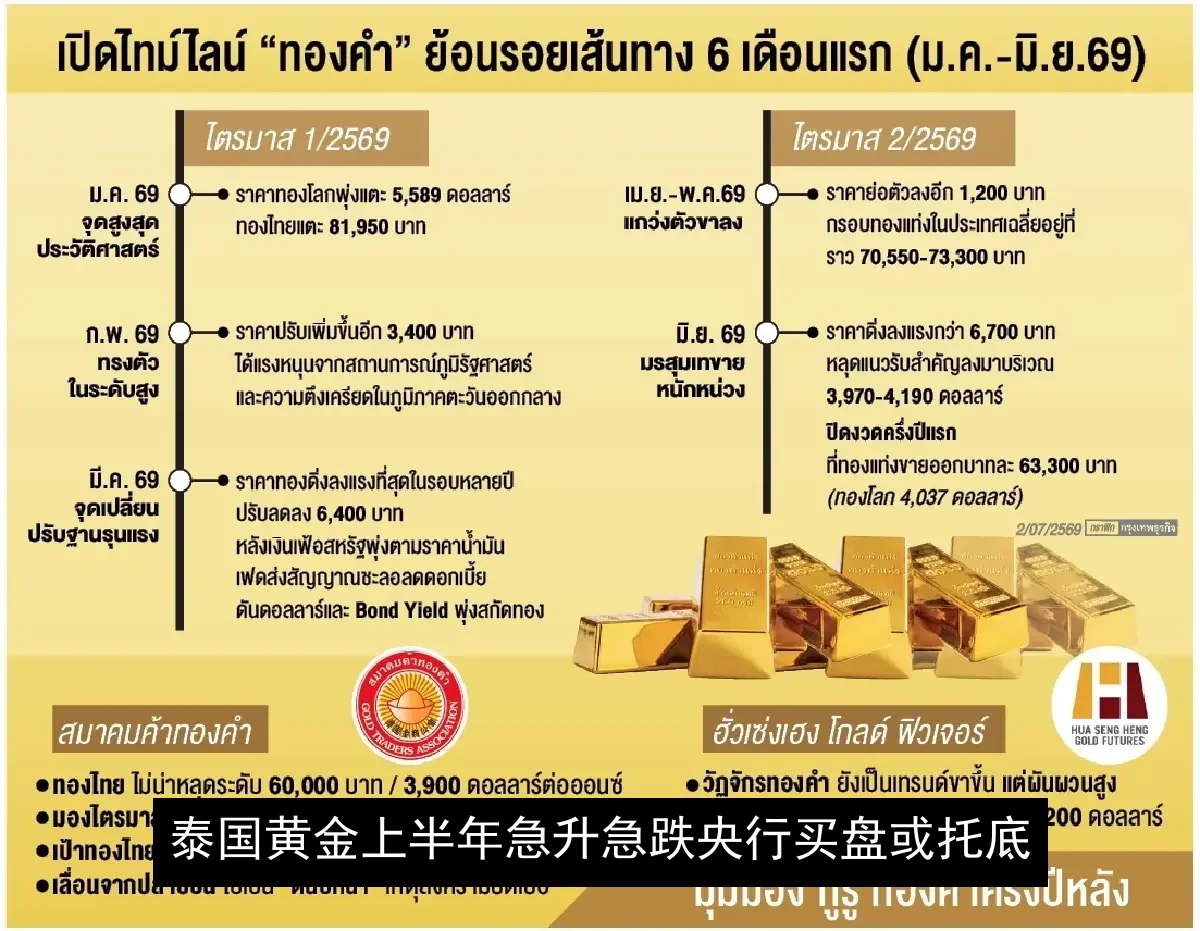
Thai gold was extremely volatile in the first half of the year, hitting an all-time high of THB 81,950 per baht-weight before falling back and ending the period at around THB 63,300. The Gold Traders Association of Thailand believes gold prices may improve gradually in the second half, with one key factor being continued buying by central banks worldwide, which could put a floor under prices.
- Gold was highly volatile in H1: it hit a record intraday high of THB 81,950 per baht-weight and finally closed around THB 63,300.
- Reasons for the early-year rally: geopolitical tensions drove money into safe-haven assets, while the U.S. Federal Reserve signaled a slower pace of rate cuts.
- Expected H2 trend: gold may recover gradually, with central bank buying seen as an important price support.
Gold market with both 'new highs' and 'new lows': from 81,950 to 63,300
In the first half of 2026 (January to June), Thai gold set new records and volatility reached historic levels. International gold prices hit an all-time high, lifting Thai gold bar prices to a record THB 81,950 per baht-weight in the first quarter. Strong selling pressure then hit in the second quarter, pushing prices far below key support levels.
At the historical peak on January 29, 2026, international gold reached USD 5,589 per ounce. Thai gold bar prices swung 75 times intraday and set their most expensive range ever: THB 77,900-81,950 per baht-weight. That was up THB 9,250 from the end of the previous year.
During February, gold prices stayed elevated and edged up another THB 3,400, continuing to benefit from tensions in the Middle East and broader geopolitical stress, which pushed investors to allocate to gold as a safe-haven asset.
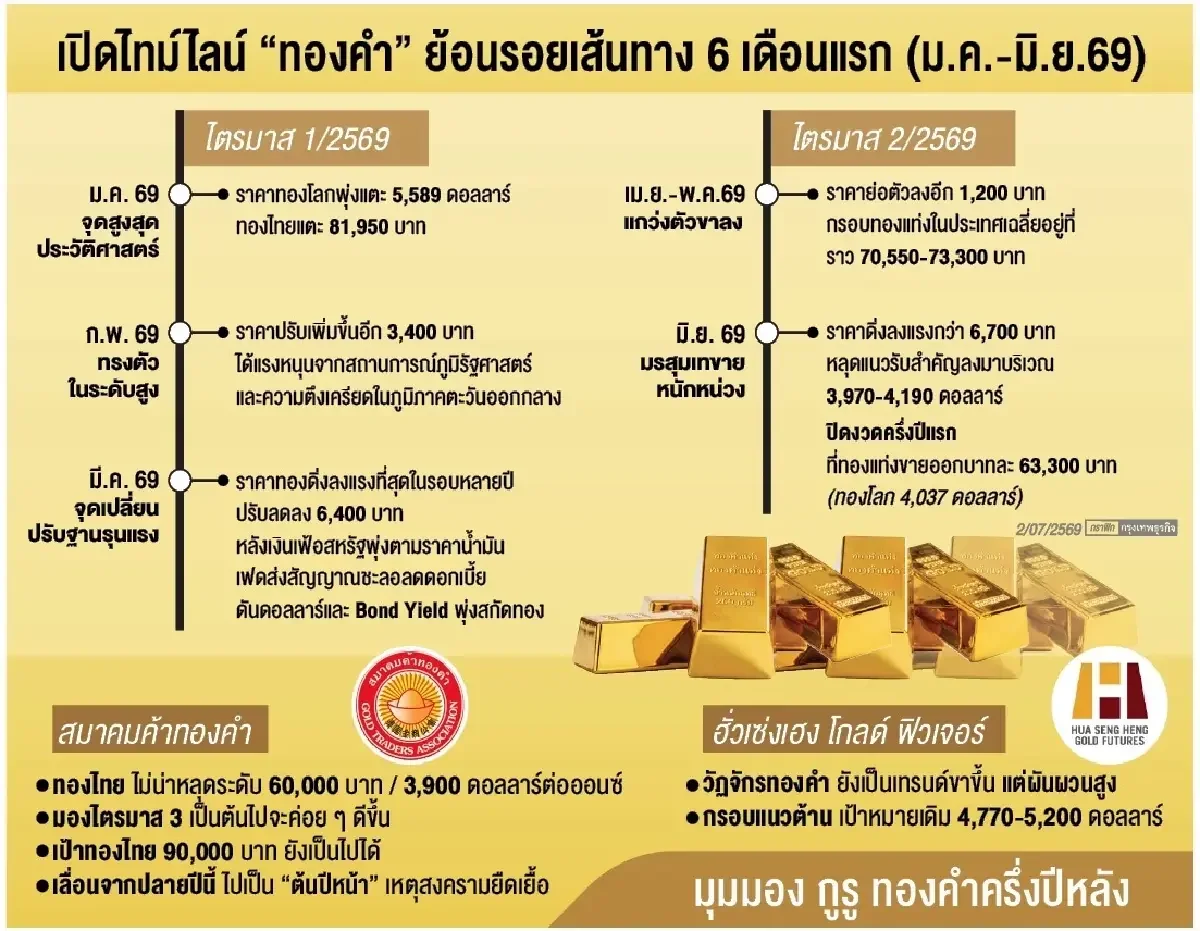
At home, prices moved in a narrow downward trend. The average gold bar range narrowed to about THB 70,550-73,300. June saw the heaviest selling wave, with prices falling more than THB 6,700 in the month, one of the most severe swings of the year; prices bottomed around USD 3,970-4,190 per ounce, causing strong turbulence in Thai gold.
On June 30, the half-year closing prices were: buyback at THB 63,100 and selling at THB 63,300, equivalent to an international gold price of about USD 4,037 per ounce. The drop also occurred in Q2, showing that much of the early-year volatility came from global uncertainty, especially as the war situation remained unclear.
Sharp weakness after March: inflation and dollar/Treasury yields pressure gold
March was seen as the key turning point for the correction. Gold underwent a sharp pullback, falling THB 6,400 in the quarter, one of the biggest declines in years. The reason was higher U.S. inflation data, while rising oil prices boosted inflation expectations, prompting the Federal Reserve to signal slower rate cuts. That pushed up the dollar and Treasury yields, which continued to pressure gold in Q2.
From April to May, gold traded downward in a choppy pattern, but still fell another THB 1,200 in total.
H2 outlook: central bank buying and rate-path expectations may provide support
Gold Traders Association of Thailand president Jitti Tangsithipakdi said the gold market in the first half of 2026 saw unusually wild swings, with both "new highs" and "new lows," especially the record set on January 29. Because the global backdrop changes every day, investors need to adjust strategies accordingly.
For the second-half direction, short-term uncertainty remains elevated due to geopolitical conflict factors, including war-related tensions in Iran. Still, the association believes gold prices will improve gradually in the third quarter, with the most important support coming from central bank buying worldwide. Large central banks are still accumulating gold, including by selling dollar bonds and reallocating into gold, and they do not care much about the exact gold price level.
The association leader also commented on the Fed's policy rate outlook: the Fed is not expected to raise rates because the U.S. government carries a heavy debt burden and may struggle to cope with higher rates; that is directly bullish for gold. If the U.S. economy runs into problems because the war continues, funds may also shift further toward reserve gold.
There is also a seasonal factor toward year-end. Typically, gold funds increase holdings during this period. As for concerns that Thai gold may fall below THB 60,000, Jitti said that is unlikely; even during the decline, prices remained relatively firm, with international gold once near USD 3,900 per ounce before rebounding above USD 4,000.
As for the previously assessed upside resistance target of THB 90,000 for Thai gold, it may still be reached, but the timing may be delayed from this year's expectation to early next year. Reasons include the war lasting longer than expected and stronger speculative swings in the futures market. The report also noted gambling-like risks in China and said Chinese regulators are controlling the market with stricter laws, so Thai investors should stay alert and cautious.
Tax discussion and market strategy: possible impact on industry competitiveness
The report also mentioned discussions about a gold trading tax. The Gold Traders Association of Thailand believes that if such a tax were imposed, it would set the Thai gold industry back and hurt its competitiveness in the regional market. Relevant authorities have discussed the issue partially, but no tax decision has been made.
The Gold Traders Association of Thailand stresses that a gold trading tax would set the industry back and hurt regional competitiveness.
In addition, Thanarat Pasuwong, CEO of Hua Seng Heng Gold Futures, said 2026 is still in an uptrend within the gold cycle, but volatility will be very high because prices are already elevated. The target range is set at USD 4,770-5,200 per ounce, and investors are advised to use a Buy on Dip strategy, waiting for pullbacks to key support levels before positioning.

ข้อควรระวังด้านลิขสิทธิ์: บทความนี้เป็นข้อมูลต้นฉบับของ ThaiDivi กรุณาติดต่อเราสำหรับการขออนุญาตเผยแพร่ซ้ำ




