


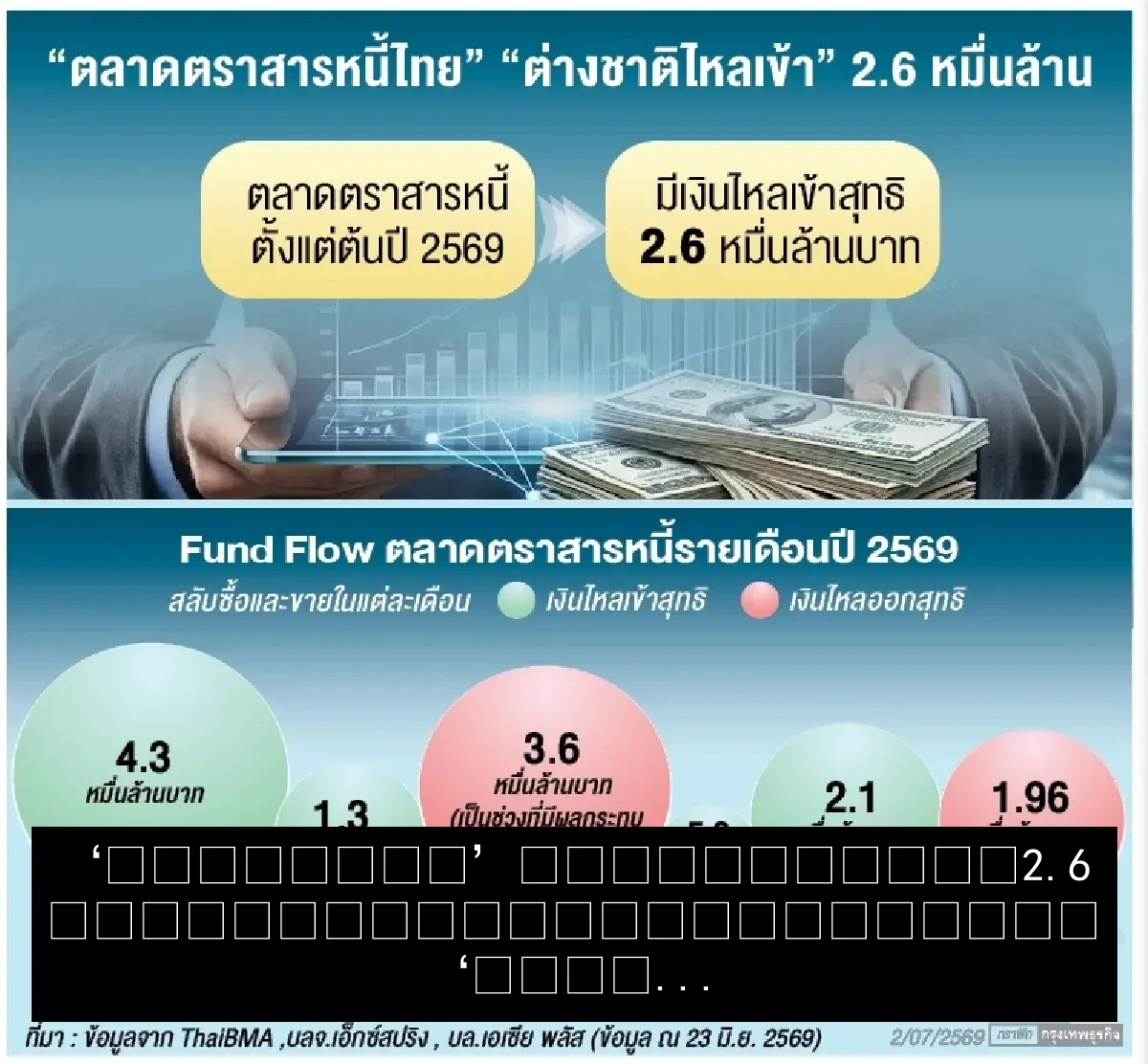
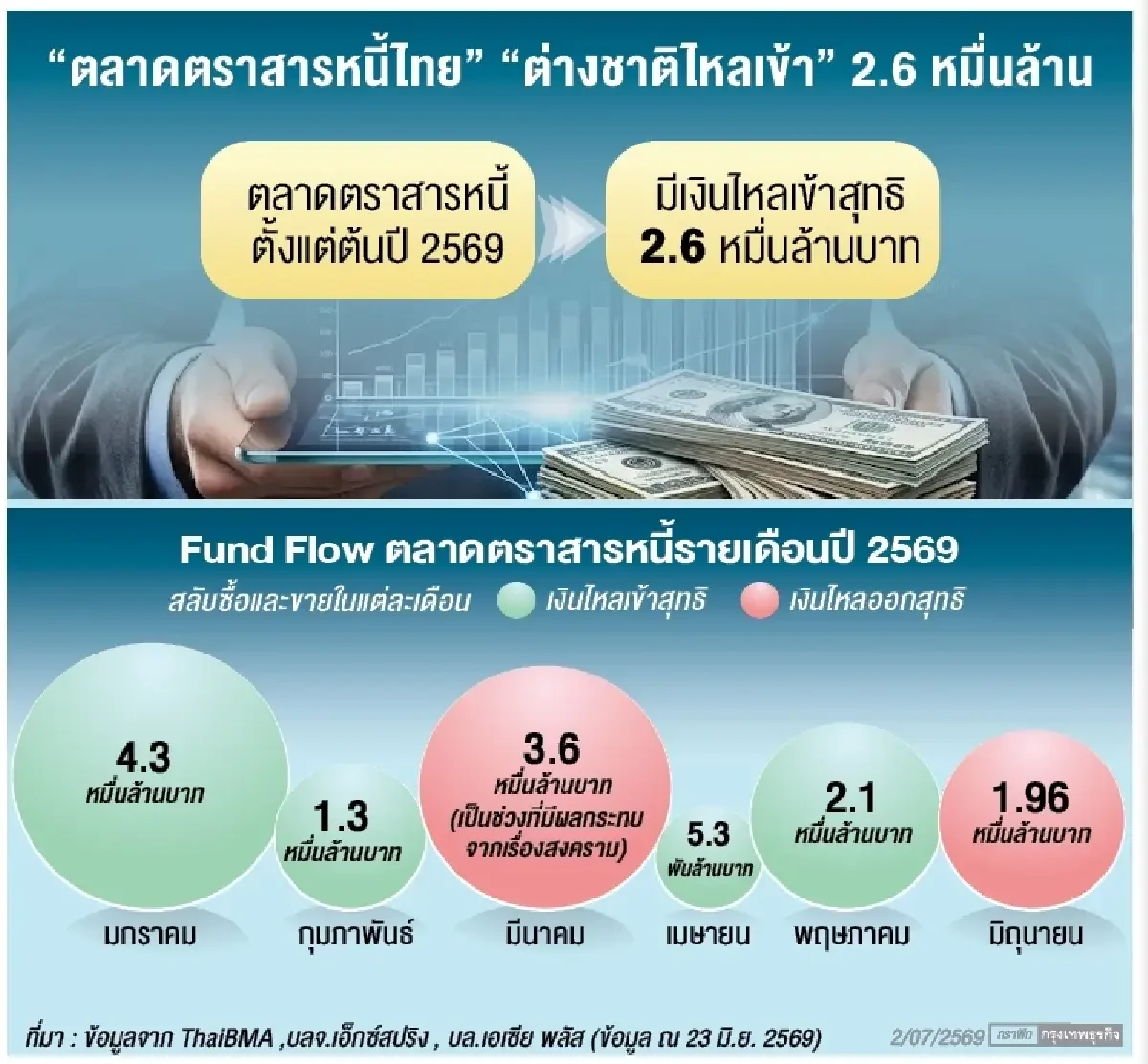
Foreign investors have net bought around THB 26 billion of Thai bonds since the start of the year, although monthly flows have fluctuated because of war and global interest-rate factors. Experts say H2 now faces more risks if the Fed continues to hike rates, which could lift global bond yields and slow inflows into Thailand.
Key points
- Since the start of 2026, foreign investors have net bought about THB 26 billion in the Thai bond market, despite monthly volatility
- Foreign fund flows have been highly volatile: March saw net outflows on war concerns, and June again showed signs of outflows
- The H2 trend faces greater external risks, especially from global rate direction, which may pressure the market
- Analysts worry that if the Federal Reserve (Fed) raises rates again, global bond yields could rise and affect fund flows into Thailand
"The Thai bond market" in 2026 is still being affected by external volatility, especially pressure from war, inflation, and global interest-rate direction, which has pushed bond yields higher recently. At the same time, foreign funds have still been net inflows of about THB 26 billion into Thai bonds since the start of the year, showing that Thailand remains on foreign investors' radar
"Ariyah Tiranaphak", general manager of the Thai Bond Market Association (ThaiBMA), told Bangkok Business News that Thailand's bond market this year is still being driven by external volatility, especially the war situation in March 2026, which pushed Thai bond yields up quickly before easing gradually as tensions subsided. Compared with the end of last year, Thai bond yields have risen by about 50 basis points due to inflation pressure and the direction of the U.S. Treasury market, but yields are still not high enough to affect government and private-sector financing costs
Thailand's 10-year bond yield is currently about 2.1%-2.2%, while the U.S. 10-year Treasury is around 4.5%, leaving a spread of about 2%. Although Thai bond yields have risen with global market trends, they remain at manageable levels. This year's foreign fund flow has moved with global developments: March saw net selling on war concerns, April saw about THB 5.1 billion flow back in, May accelerated inflows to about THB 21.2 billion, and June again showed signs of outflows
From the start of the year to now, foreign fund flow in the Thai bond market is still positive, with net inflows of about THB 26 billion. Foreign holdings of Thai bonds total about THB 950 billion, reflecting continued interest in the Thai bond market
Because funding demand is high, the Finance Ministry has adjusted its funding strategy and diversified borrowing sources to reduce pressure when bond yields are volatile. If too many government bonds are issued, it could suppress a sharp rise in yields
The private corporate bond market is starting to recover clearly. Corporate bond issuance in Q1 shrank by about 15% because of war concerns and global market volatility, but large companies have gradually resumed fundraising, bringing cumulative corporate bond issuance to about THB 3.71 trillion, close to the THB 3.78 trillion in the same period last year
Pataranan Tanyawan Limudthongphon, senior manager and investment strategist at Xspring Asset Management, said the Thai bond market has begun to show more worrying signs in H1, with foreign fund flows slowing sharply and the net amount since the start of the year down to only THB 26.329 billion
Latest monthly data show foreigners have already net sold more than THB 19.665 billion, suggesting a change in flow direction, unlike last year when they were still net buyers of more than THB 72 billion. The market is also facing yield-curve distortion, as buying in short-term government bonds pushes yields down while selling in 10- to 30-year bonds pushes yields up, which may hurt private companies, especially those that need to issue long-term corporate bonds, because funding costs may rise and fundraising may become harder
Pharado Thianpramote, head of research at Asia Securities, said that in H1 foreign fund flow into Thai stocks remained positive overall, while the bond market also had nearly THB 26 billion of net inflows, showing that Thailand still attracts foreign interest even though selling pressure reappeared in June 2026
"Funds flowed strongly into the bond market early in the year, then turned to outflows in March because of the war, flowed back in during April-May, and turned to outflows again in June, bringing the cumulative amount down to about THB 26 billion"
However, H2 risks are rising because the Fed may hike again, which could push global bond yields higher and affect bond fund flows and the investment mood for risk assets

ข้อควรระวังด้านลิขสิทธิ์: บทความนี้เป็นข้อมูลต้นฉบับของ ThaiDivi กรุณาติดต่อเราสำหรับการขออนุญาตเผยแพร่ซ้ำ




