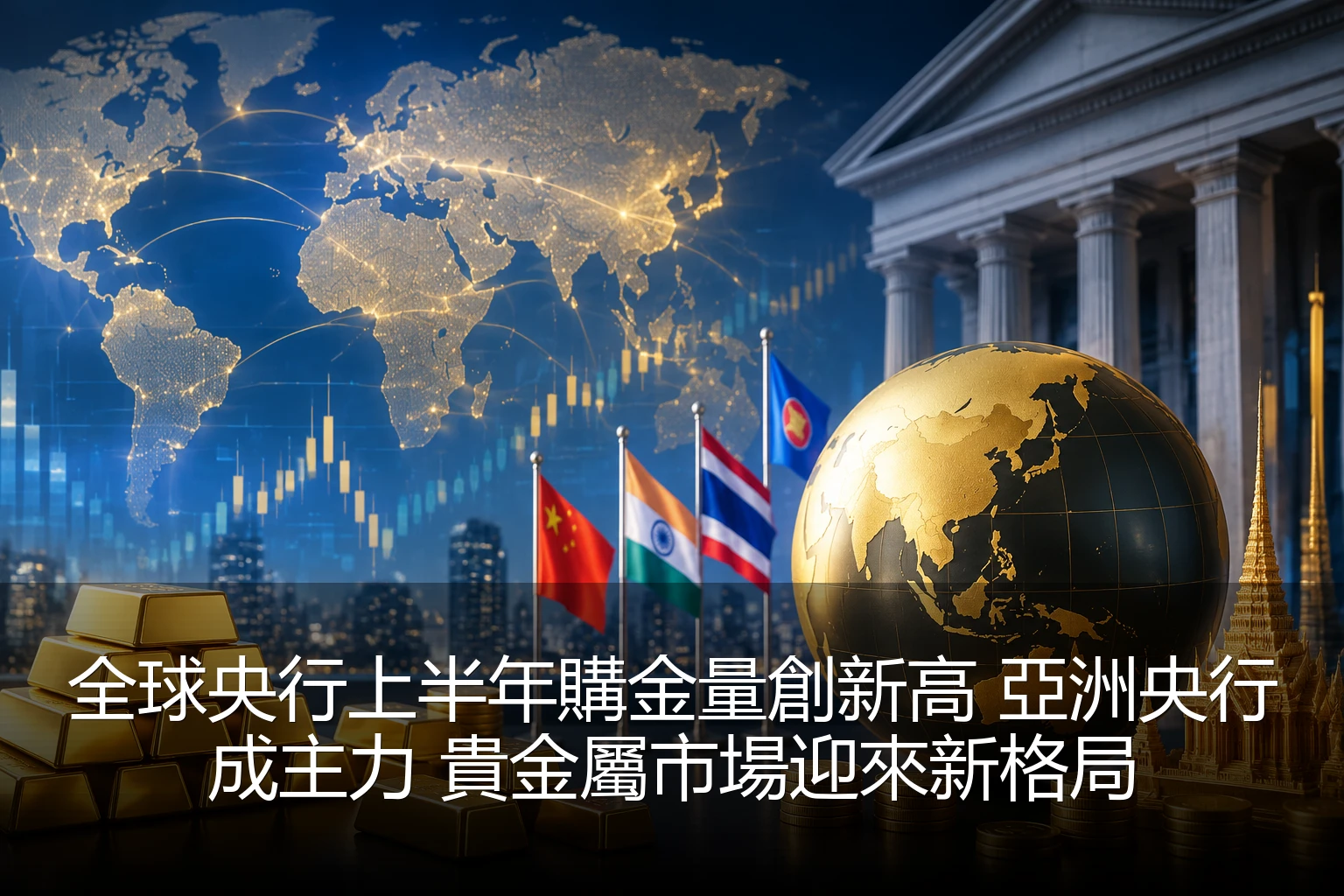
World Gold Council released the latest Global Gold Demand Trends Report on July 31. Data shows that in the first half of 2026, global central bank net gold purchases reached 320 tons, an 18% increase compared to the same period last year, with Asian central banks contributing over sixty percent of the purchases, making them the strongest official buying force in the gold market.
Asian Central Banks Lead Gold Buying Trend
The report indicates that the People's Bank of China, the Reserve Bank of India, and the Bank of Thailand are the main buyers in Asia. Chinese central banks increased their gold holdings by about 85 tons in the first half of the year, continuing their strategy of diversifying long-term foreign exchange reserves. The Reserve Bank of India increased its holdings by 43 tons, influenced by the strong domestic demand for jewelry and the pressure from the depreciation of the rupee. Notably, the Bank of Thailand also purchased about 12 tons of gold in the first half of the year, setting a new record for recent years.
Analysts believe that the collective increase in gold holdings by Asian central banks is not coincidental. Against the backdrop of escalating geopolitical conflicts and instability in the dollar's credibility, gold's position as a "ultimate safe-haven asset" has been reinforced. Especially for Thailand, given the volatile fluctuation of the Thai baht exchange rate, holding gold helps stabilize the purchasing power of national foreign exchange reserves.
Transformation in Global Central Bank Gold Buying Structure
Over the past decade, official central bank demand in the gold market has been driven mainly by emerging market central banks such as Russia and Turkey, but a clear structural shift is occurring in the first half of 2026. Asian central banks have surpassed Eastern Europe and Central Asia to become the largest group of gold buyers. A senior analyst from the World Gold Council stated in an interview: "This shows that Asian countries are gradually diversifying risk away from the dollar system towards more neutral reserve assets." Meanwhile, the number of central banks selling gold is very small, with only a few European central banks adjusting their operational needs slightly, indicating that the overall trend of net central bank net holdings remains stable.
Significance for the Thai Precious Metal Market
As soon as news of the Bank of Thailand purchasing gold is released, the domestic gold market in Thailand reacts positively. The Chairman of the Thailand Gem Traders Association (TGTA) pointed out that central bank gold purchases have a positive effect on jewelry and investment demand. Private investors believe that "central banks are buying, so gold prices are optimistic in the long term." Statistics show that retail gold purchases in Thailand rose by 15% in the last week of July, with gold bars and coins being the most popular. Furthermore, the exchange rate of the Thai baht against the dollar recently fell near 1 dollar to 36.8 Thai baht, causing domestic gold prices in Thailand, priced in Thai baht, to rise. Investors who wish to participate in the gold market can do so through gold futures or gold ETFs on the Thailand Futures Exchange (TFEX), but must also manage exchange rate risk.
Expert Interpretation: Outlook for Gold Prices
Several institutions predict that international gold prices will maintain an upward trend, given the continued central bank buying and the possibility of the US Federal Reserve initiating a rate cut cycle in the fourth quarter. However, short-term gold prices are at a historical high, and technical indicators suggest overbought conditions, which may lead to a profit-taking pullback. Senior analysts recommend that prudent investors should allocate gold through regular fixed-amount plans and avoid excessive chasing of prices. Overall, Asian central banks are the "North Star" of the gold market, which can provide long-term support for precious metal prices. Thai investors can monitor gold stocks and ETFs in line with the trend, but must pay attention to entry timing.

ข้อควรระวังด้านลิขสิทธิ์: บทความนี้เป็นข้อมูลต้นฉบับของ ThaiDivi กรุณาติดต่อเราสำหรับการขออนุญาตเผยแพร่ซ้ำ